
Reducing operating costs requires a strategic approach to outsourcing, not just hiring external teams. With metrickal, companies can optimize payroll, infrastructure, and processes while maintaining clear communication and full control over KPIs.
Leveraging LATAM’s pre-screened talent, flexible contracts, and shared technology enables significant savings on salaries, benefits, office space, and software.
Strategically implementing outsourcing leads to sustainable cost reductions, increased productivity, and operational efficiency—all with rapid scalability and minimal legal risks.
By adopting this approach, companies can streamline their operations, control costs, and remain competitive.
Explore metrickal to discover customized outsourcing solutions in Latin America and maximize your ROI.
Key Benefits of Outsourcing in Latin America
Before delving into each strategy, here are three key points that will guide our decisions:
Significant Reduction in Salaries and Payroll Costs
By outsourcing tasks to countries in Latin America, we can take advantage of wage differences without compromising the quality of the work.
Infrastructure and Process Optimization
Outsourcing allows us to eliminate expenses related to physical offices, hardware, and software licenses, while adopting shared technologies and cloud-based solutions.
Scalability and Operational Flexibility
We can quickly increase or decrease our workforce based on demand, without any legal complications or layoff costs.
Introduction to Outsourcing in Latin America
Outsourcing in Latin America involves contracting external services for key tasks—from customer support to software development—with the goal of reducing costs and increasing efficiency.
It works best when we take advantage of the similar time zones and cultural similarities with our main markets, facilitating real-time communication and collaboration.
Given the region’s economic context, countries such as Chile, Mexico, and Brazil offer financial stability, controlled inflation, and secure payment methods in U.S. dollars, ensuring that our operations are sustainable and reliable.
Implementing nearshore outsourcing allows us to save money while maintaining a high level of quality and control over our processes.
As you continue reading, we will explore specific strategies that can be implemented to reduce operational costs immediately and measurably.
Strategies for Reducing Operating Costs
Before listing the strategies, it is important to understand that every decision we make directly impacts our overhead costs and operational efficiency. Therefore, we must carefully plan the outsourcing of processes.
Savings on Salaries and Payroll
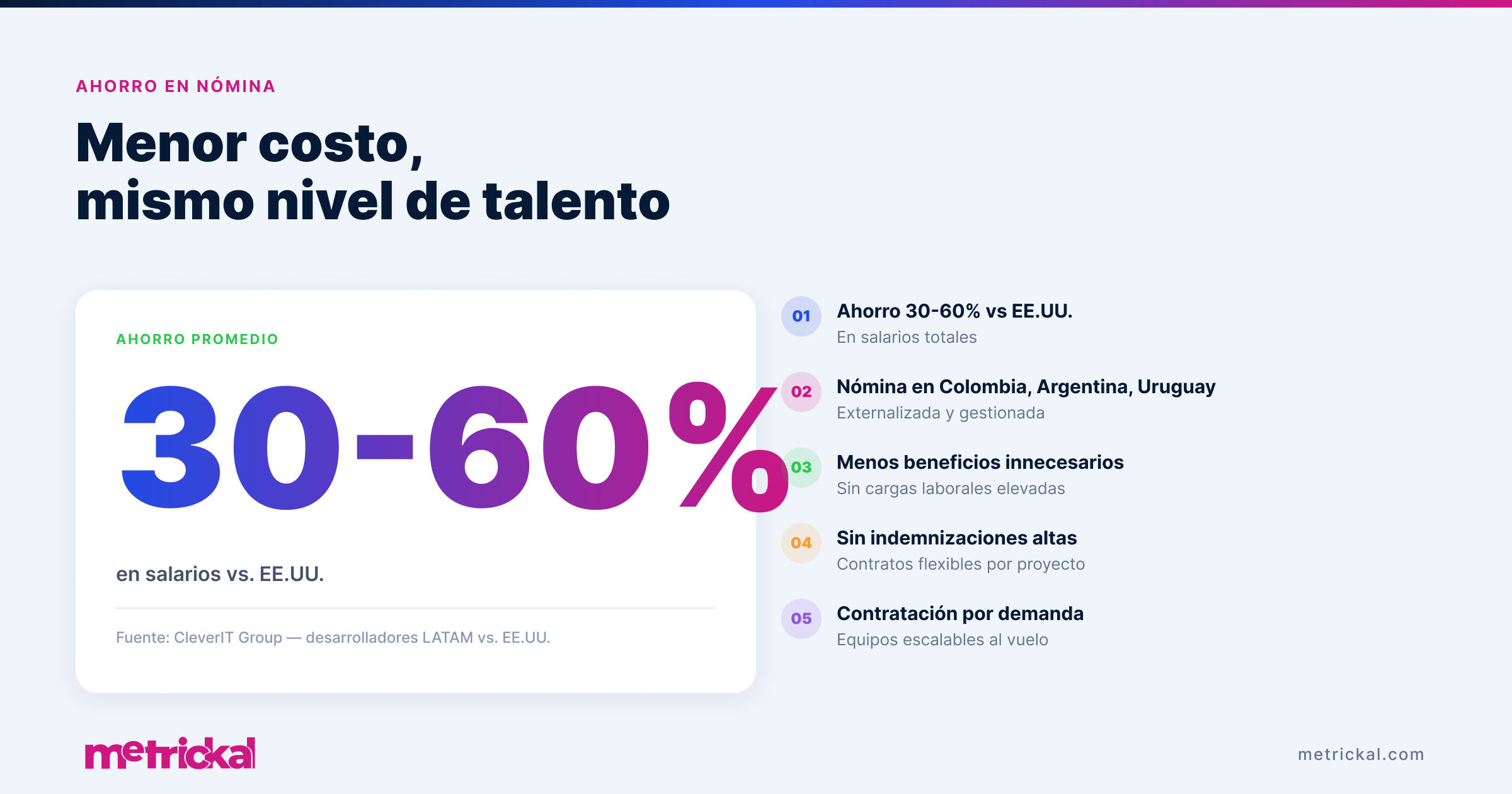
Outsourcing certain functions in Latin America can significantly reduce labor costs, since wages and social security contributions in the region are, on average, much lower than in the United States and other developed markets.
For example, hiring developers or technical support staff can be 30% to 50% more cost-effective in Latin American countries due to lower costs of living and more affordable salary structures, which allows companies to optimize their budgets without sacrificing the quality of talent.
In addition, non-wage costs (such as benefits and employer contributions) in Latin America typically account for a smaller proportion of total compensation compared to other regions, which further contributes to overall payroll savings.
According to CleverIT Group, “hiring developers in Latin American countries can be 30% to 50% more cost-effective than in the U.S., even after taking the vendor’s margins into account.”
Payroll Optimization and Wage Savings
Key points:
- 30–60% savings on wages compared to the U.S.
- Outsourced payroll in Colombia, Argentina, and Uruguay.
- Reduction of unnecessary employee benefits.
- Elimination of severance pay and high social security contributions.
- Flexibility to hire teams on a project basis or on demand.
Infrastructure Optimization
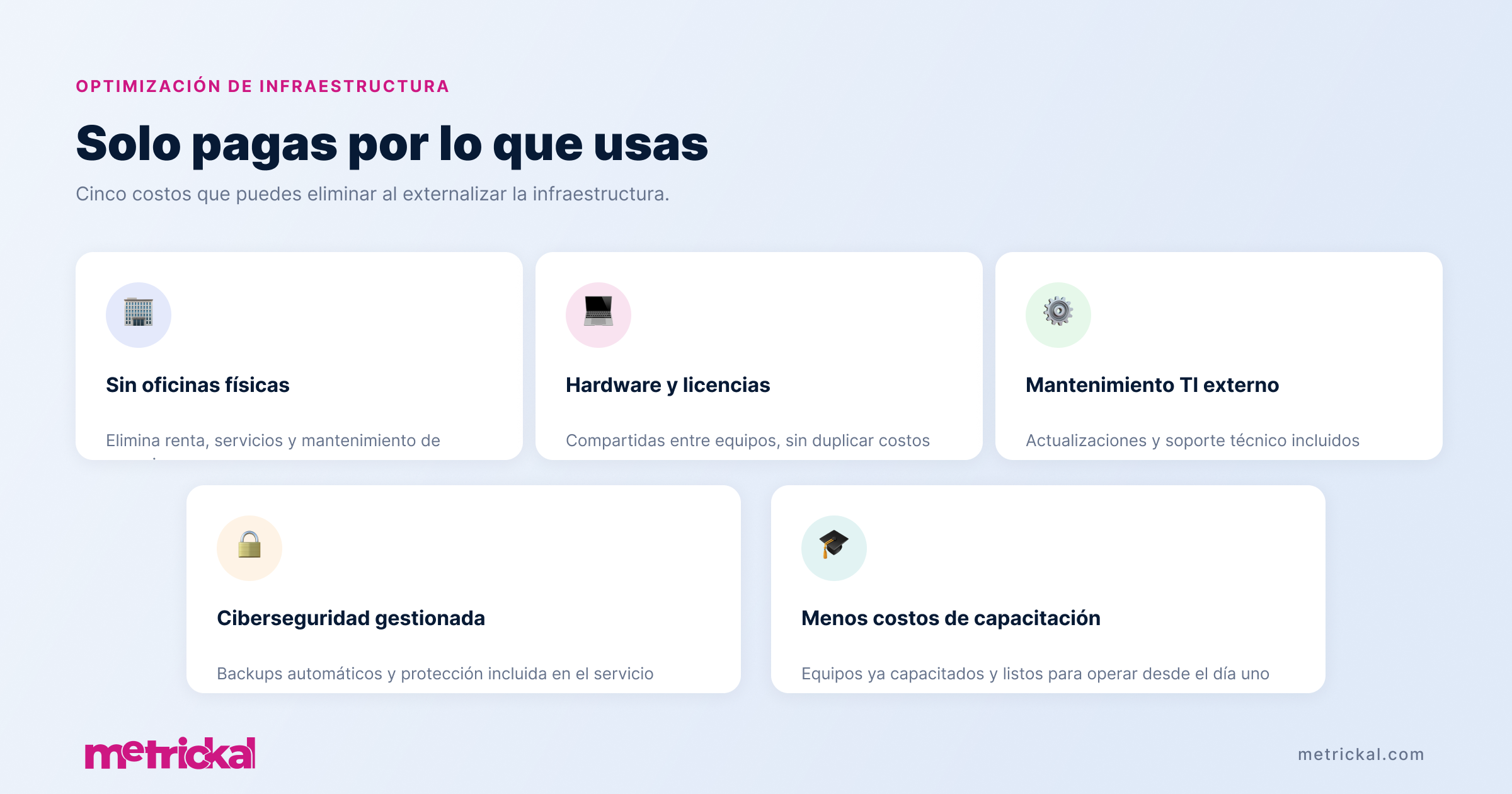
Outsourcing also allows us to eliminate costs associated with physical infrastructure and technology.
We can operate without physical offices, use third-party hardware, share software licenses, and take advantage of cost-effective cloud services in Latin America.
This ensures that we only pay for what we use and can update our tools without additional investment.
Key points:
- Elimination of costs associated with physical offices.
- Hardware and software licenses shared among computers.
- External IT maintenance and technology upgrades included.
- Automatic backups and managed cybersecurity.
- Reduced training and onboarding costs.
Processes and Operational Efficiency
Outsourcing makes it possible to standardize processes and improve productivity through automation and agile methodologies.
This includes automated billing, nearshore AR/AP processing, and tracking of KPIs through real-time dashboards, which helps teams focus on strategic tasks rather than manual ones.
According to Deloitte’s 2021 Global Shared Services and Outsourcing Survey, organizations are increasingly adopting shared services and external teams to improve process efficiency and standardization while reducing costs, noting that “process efficiency and standardization have surpassed cost reduction as the primary objective for investing in GBS.”
Key points:
- Automation of billing and accounting processes.
- Agile methodologies and daily nearshore sprints.
- Dashboards and monthly operating cost reports.
- Rapid training and efficient knowledge transfer.
- Continuous improvement without disrupting operations.
Selection of Strategic Partners in Latin America
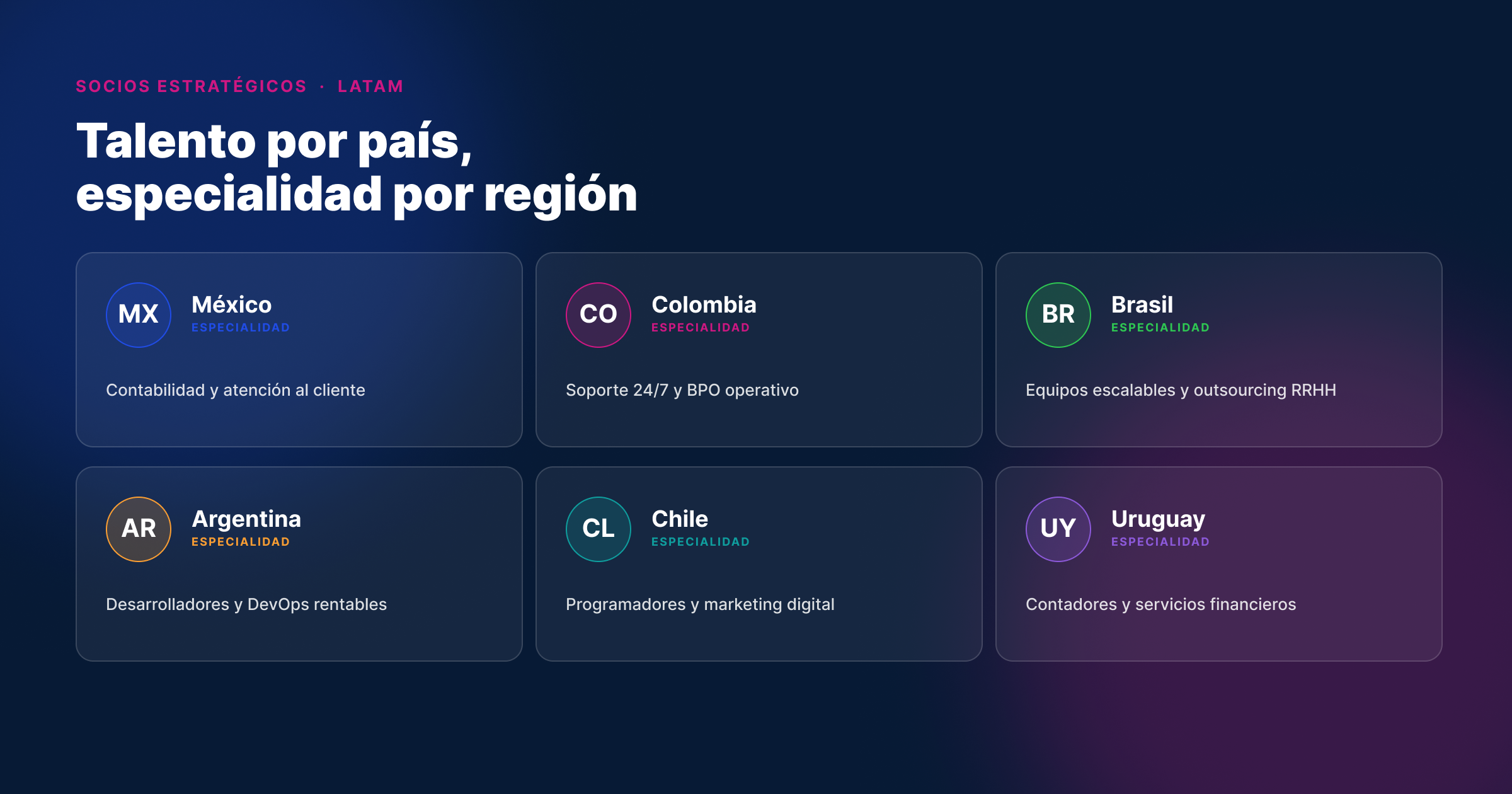
Choosing the right partners is essential for reducing costs and ensuring quality. By working with metrickal, we gain access to pre-screened talent, scalable teams, and flexible solutions tailored to our needs.
Before reviewing the countries and services, we should keep in mind that similar time zones and work cultures facilitate collaboration and eliminate late-night meetings, thereby optimizing team productivity.
Nearshore vs. Remote Outsourcing
Working with nearshore partners aligns time zones and ensures effective communication. For example:
- Mexico: Accounting and customer service.
- Colombia: 24/7 Support and Operational BPO.
- Brazil: Scalable teams and human resources outsourcing.
Benefits of Nearshore Outsourcing
Key benefits:
- Real-time communication without time zone barriers.
- Rapid scalability based on demand.
- Services tailored to our needs without long-term commitments.
Competitive IT Talent
LATAM offers highly qualified programmers and specialists at significantly lower costs. Examples include:
- Argentina: Profitable Developers and DevOps.
- Chile: Competitive programmers and digital marketing specialists.
- Uruguay: Remote Accounting and Financial Services.
Additional benefits:
- Access to pre-screened talent.
- Proficiency in English and modern work methodologies.
- A similar work culture, making it easier to integrate into our team.
Key Factors in Choosing Suppliers
When selecting suppliers, we should consider:
- Flexible contracts with no early termination penalties.
- Tax and regulatory compliance in each country.
- Teams with fluent English and advanced technical skills.
- Ability to collaborate in real time and scale up immediately.
Benefits:
- Reduction of legal and operational risks.
- Greater efficiency in project management.
- Flexibility to adjust the size of the equipment as needed.
Maximizing ROI Through Outsourcing
For outsourcing to be truly effective, we must measure its impact on costs and efficiency.
Risk Mitigation and Operational Management
Outsourcing allows us to delegate complex responsibilities—such as tax compliance, cybersecurity, and automatic backups—to trusted partners like Metrickal, thereby reducing risks and ensuring business continuity.
Key points:
- Operational Risk Management and Employer of Record (EOR).
- Accounting audits and guaranteed savings.
- Data security and service continuity.
Measuring Results
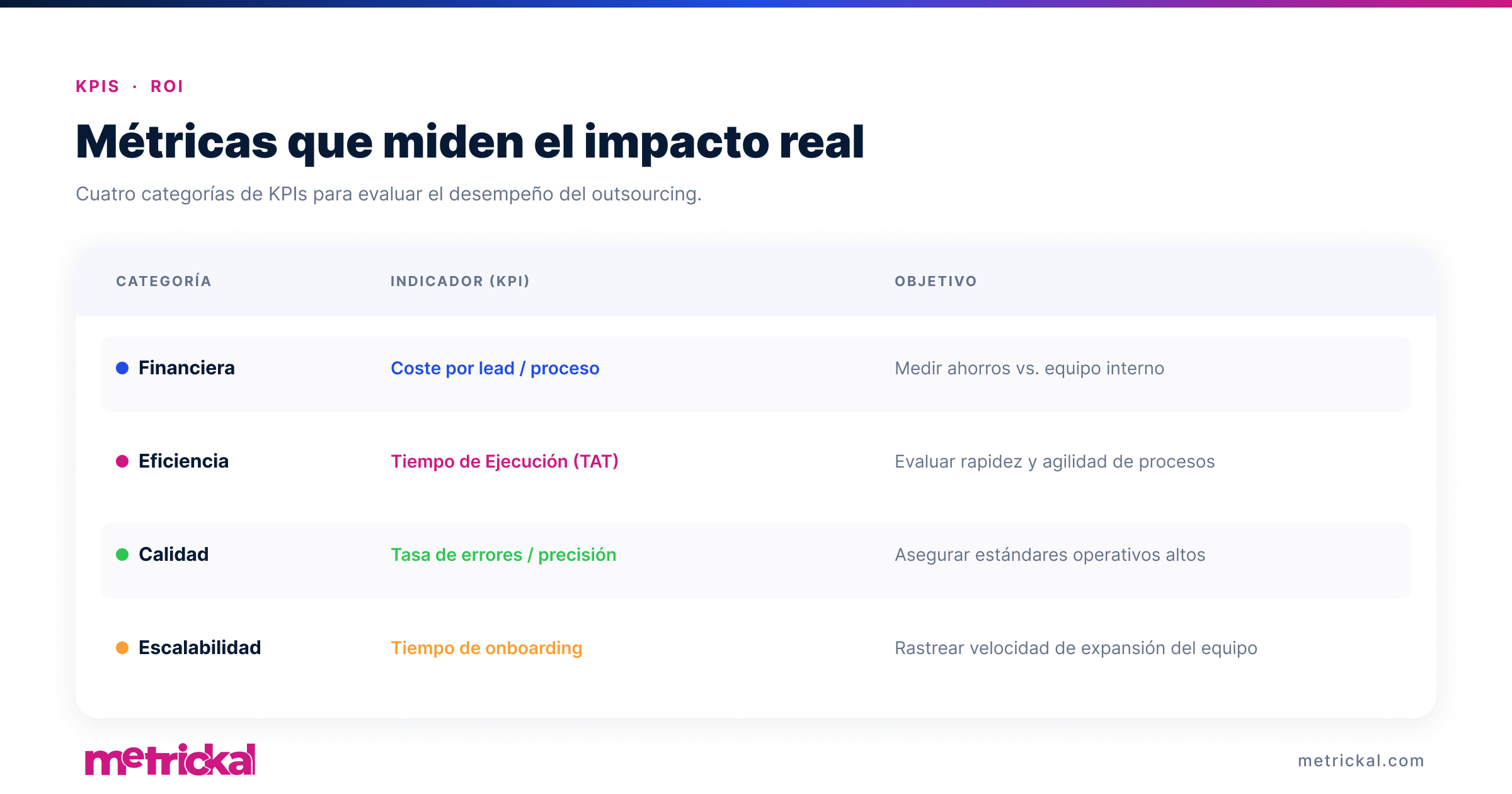
We can measure ROI using clear KPIs and dashboard reports. This allows for an objective assessment of team performance, costs, and efficiency.
Key points:
- Clear and measurable operational KPIs.
- Real-time dashboards for continuous monitoring.
- Monthly reports to identify opportunities for savings.
| Category | Key Performance Indicator (KPI) | Objective |
|---|---|---|
| Financial | Cost per Lead / Cost per Process | Measure direct savings compared to in-house execution. |
| Efficiency | Turnaround Time (TAT) | Assess the speed at which tasks are completed and the agility of processes. |
| Quality | Error Rate / Accuracy Percentage | Ensure that the external partner maintains high operational standards. |
| Scalability | Onboarding Time | Track how quickly a team can scale to meet new demands. |
Scalability and Flexibility
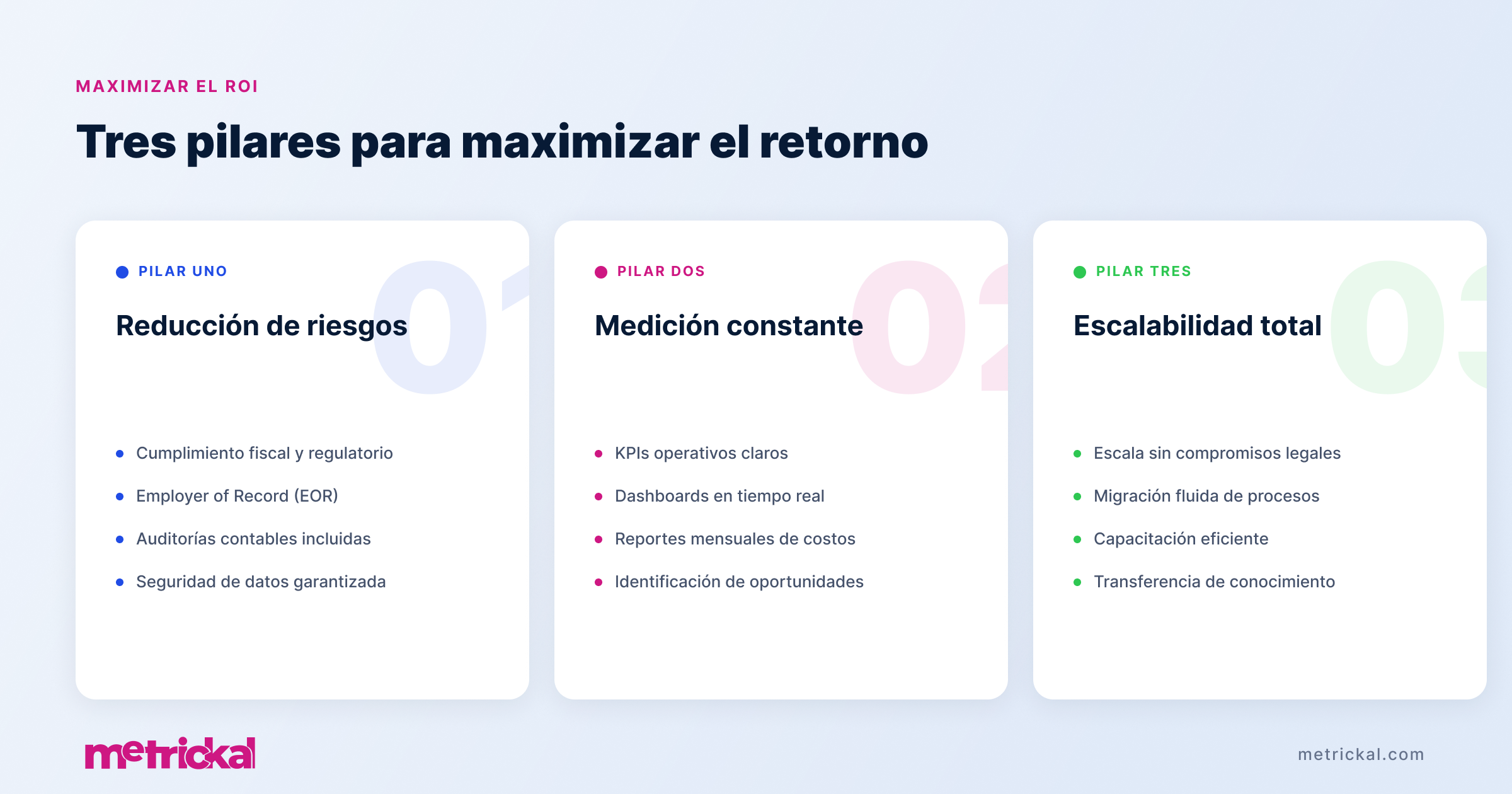
Outsourcing offers the ability to scale teams quickly without tying up capital or facing complex legal costs.
We can seamlessly migrate processes and efficiently train teams.
Key points:
- Scalability without compromise.
- Fast and well-organized process migration.
- Efficient training and optimized knowledge transfer.
FAQ
What is outsourcing in Latin America, and how does it help reduce costs?
Outsourcing in Latin America involves contracting external services in Latin American countries for key business functions. It reduces costs by taking advantage of lower wages, minimizing infrastructure expenses, and providing scalable teams without significant financial commitments.
Which countries in Latin America are the best for nearshore outsourcing?
Countries such as Mexico, Colombia, Brazil, Chile, Argentina, and Uruguay are popular because of their financial stability, skilled workforce, cultural compatibility, and time zones that facilitate real-time collaboration.
What types of services can be outsourced in Latin America?
The most commonly outsourced services include accounting, customer service, software development and IT, BPO operations, human resources, and digital marketing.
How can companies ensure quality while outsourcing?
By selecting strategic partners with pre-screened talent, clear KPIs, flexible contracts, and real-time collaboration tools, companies can maintain quality while reducing costs.
What are the main benefits of nearshore outsourcing in Latin America?
The benefits include reduced payroll and infrastructure costs, access to qualified talent, rapid scalability, operational flexibility, and increased productivity—all without legal or financial risks.
How to Implement Outsourcing to Reduce Operating Costs
Strategic outsourcing in Latin America goes beyond simply hiring external teams. It’s about optimizing costs, processes, and productivity.
By leveraging metrickal’s pre-screened talent, flexible contracts, and shared technology, companies can achieve sustainable savings in payroll, benefits, infrastructure, and software.
This approach enables rapid scalability of teams, operational efficiency, and a higher ROI, all while maintaining control over KPIs and quality. Companies that strategically implement outsourcing can streamline their operations, reduce overhead costs, and remain competitive in a global market.
Explore metrickal to discover customized outsourcing solutions in Latin America and start optimizing your operating costs today.
References
- CleverIT Group — Benefits of Outsourcing IT Services in Latin America
- Deloitte — Global Shared Services and Outsourcing Survey